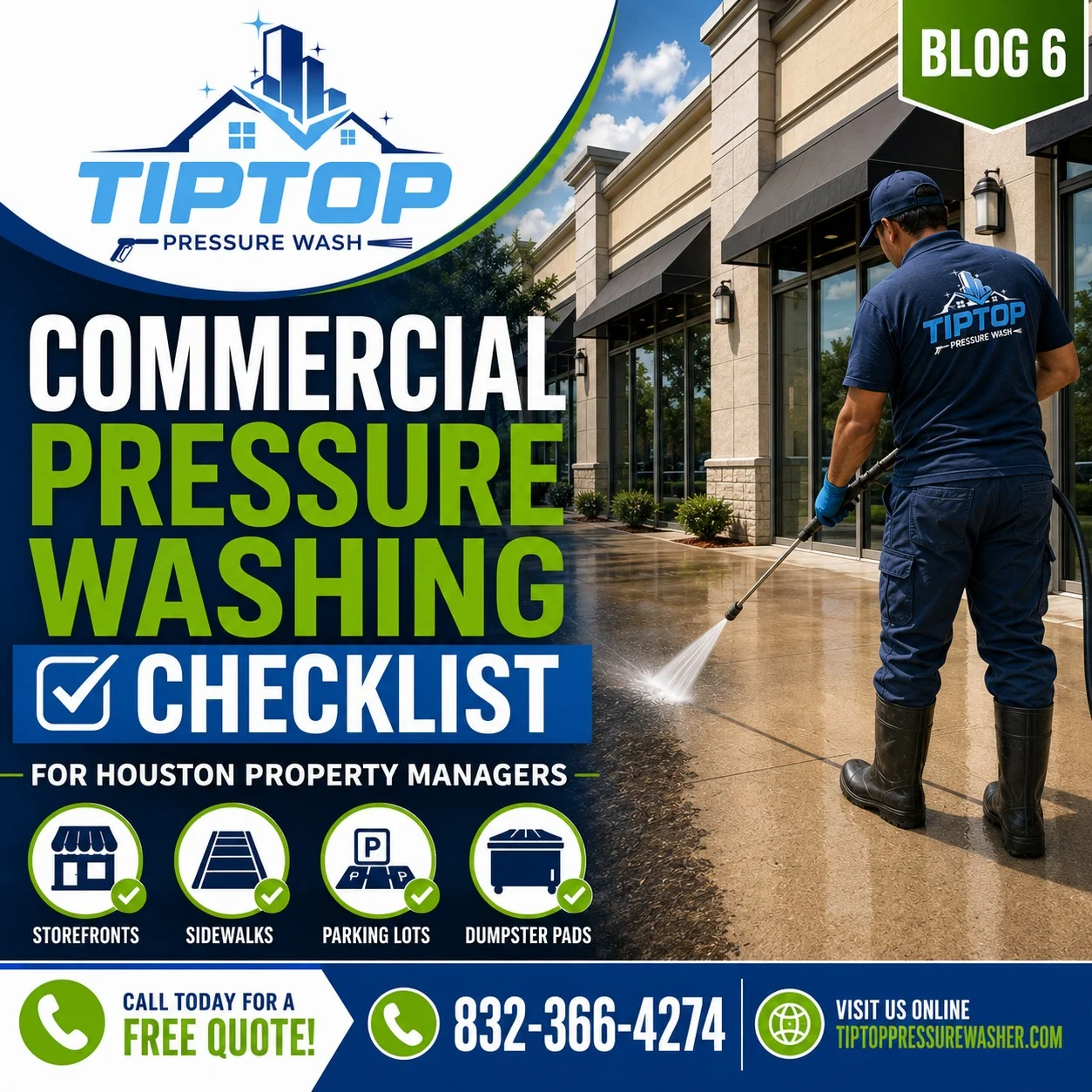
Managing a commercial property in Houston means staying ahead of exterior maintenance. Customers, tenants, employees, inspectors and owners all notice the outside of a property before anything else.
Dirty sidewalks, stained entrances, algae-covered walls, greasy dumpster pads and grimy storefronts can make even a well-run property look poorly managed. Commercial pressure washing remains one of the most practical ways to protect curb appeal, boost tenant satisfaction and maintain a professional property image.
Tip Top Pressure Washing provides commercial pressure washing in Houston, TX, and surrounding areas, including Sugar Land, Rosenberg, Richmond, Missouri City, Katy, Cypress, Spring, Tomball, Stafford, The Woodlands, Pearland, Fulshear, Bellaire, Memorial, and West University.
This guide gives Houston property managers a complete checklist covering what to clean, how often, common mistakes to avoid, and how to build a maintenance plan that protects long-term property value.
Why Commercial Pressure Washing Matters
Commercial pressure washing isn’t just about appearance. It plays a role in property maintenance, tenant experience, customer confidence and overall brand presentation.
A clean exterior can improve curb appeal, create a stronger first impression, and keep tenant-facing areas more inviting. It also reduces slippery algae buildup and removes grime from sidewalks and entrances.
In Houston, exterior buildup happens quickly due to humidity, rain, heat, traffic and constant commercial use. Properties in shaded or high-traffic zones often need cleaning more frequently than those with open sun exposure.
Complete Commercial Pressure Washing Checklist
A smart cleaning plan should cover the entire exterior, not just one obvious area. Use this checklist when walking a property before requesting a quote.
- Main Areas to Inspect: building walls, storefronts, sidewalks, entryways, curbs, parking lots, dumpster pads, drive-through lanes, loading zones, patios, pool decks, breezeways, stairways, garage entrances, signage areas, awnings and exterior windows.
- Common Problems to Look For: algae growth, mildew staining, grease and oil stains, gum on sidewalks, dumpster pad grime, rust stains, tire marks, water runoff marks and stained walls or columns.
Property managers should document these areas with photos before requesting a quote, since photos help cleaning companies understand the property condition and provide a more accurate estimate.
Building Exterior Washing Checklist
The building exterior is the face of the property. For offices, medical buildings, retail centers, churches, schools and apartment communities, clean exterior walls make the whole property look better maintained.
Check the front, side and rear elevations, along with stucco or painted surfaces, brick or masonry, siding, soffits, fascia, signage areas, awnings and shaded walls prone to algae or mildew.
Not every surface should be pressure washed. Stucco, EIFS, painted surfaces, and delicate exterior materials often need soft washing rather than high-pressure washing, while concrete and other hard surfaces typically handle pressure washing well. A professional company should choose the method based on the surface, not apply high pressure everywhere.
Storefront and Sidewalk Cleaning Checklist
Storefronts and sidewalks are high-impact areas because customers walk through them daily. A clean storefront makes a business look open, professional and welcoming.
Inspect the front entrance, customer walkway, sidewalks, doorway area, window ledges, signage, columns, patios and common walkways for gum spots, food spills and grime buildup.
Clean storefronts improve walk-in customer confidence, tenant satisfaction, brand image and leasing presentation. If a property has multiple tenants, a recurring sidewalk cleaning schedule works best, since restaurants and coffee shops often need more frequent attention than office tenants.
Parking Lot Pressure Washing Checklist
Parking lots are among the most visible parts of a commercial property, and a dirty lot can make the entire property look neglected.
Inspect parking spaces, drive lanes, curbs, oil stain areas, tire marks, pedestrian walkways, handicap spaces, loading zones and drainage areas. Pressure washing can help remove or improve oil stains, tire marks, dirt buildup, gum, grease, algae and mildew, though older stains may not disappear completely.
If your parking lot lines are faded, clean the surface before re-striping. Dirt, oil and debris can affect how sharp fresh paint looks. Tip Top Pressure Washing offers both parking lot pressure washing and parking lot striping, which simplifies the process for property managers.
Dumpster Pad Cleaning Checklist
Dumpster pads are among the most neglected areas on commercial properties. They collect grease, food waste, spills, odors and heavy grime over time.
Inspect the enclosure floor, surrounding concrete, drainage areas, grease spots, loading zones and nearby sidewalks. Dumpster pad cleaning matters most for restaurants, retail centers, apartments, schools and hotels, since a dirty dumpster area creates odor issues and tenant complaints.
Dumpster pads often need recurring cleaning rather than a one-time service. Restaurants and food-service locations typically need more frequent visits since grease and food residue build up quickly.
Restaurant and Retail Cleaning Checklist
Restaurants and retail centers have some of the highest exterior cleaning needs because of customer traffic, food spills and frequent grease buildup.
For restaurants, focus on the front entrance, patio, sidewalks, drive-through lanes, grease-prone concrete, dumpster pads and delivery zones. For retail centers, prioritize storefront sidewalks, common walkways, parking lot fronts, cart areas and tenant entrances.
A restaurant may need monthly or quarterly cleaning of sidewalks, drive-through lanes and dumpster pads. A retail center may need semi-annual or annual pressure washing, with more frequent spot cleaning for high-traffic tenants.
Apartment, HOA, Church and School Cleaning Checklist
Commercial pressure washing isn’t only for retail and restaurants. Many community properties also need regular exterior cleaning.
Apartment communities should check breezeways, stairwells, sidewalks, pool decks, dumpster pads and parking areas. HOAs should inspect community sidewalks, clubhouse areas, pool decks and shared parking zones.
Churches and schools should focus on entryways, sidewalks, parking lots and covered walkways. These properties often benefit from seasonal or annual cleaning before busy events, inspections or school openings.
Soft Washing vs Pressure Washing for Commercial Properties
A strong cleaning plan uses both soft washing and pressure washing where appropriate. Soft washing works best for stucco, painted walls, EIFS, siding, awnings and other delicate surfaces.
Pressure washing suits durable surfaces like concrete, sidewalks, curbs, parking lots, dumpster pads and loading zones. Choosing the right method protects the surface while still delivering a thorough clean.
Commercial pressure washing is best for durable surfaces like concrete, parking lots and dumpster pads, while soft washing protects delicate commercial materials from potential damage.
How Often Should Commercial Properties Be Pressure Washed?
Cleaning frequency depends on property type, traffic, weather exposure and stain level. Restaurants typically need monthly or quarterly service, while office buildings and apartment communities often do well with annual or semi-annual cleaning.
Dumpster pads generally need monthly or quarterly attention, and parking lots are usually cleaned semi-annually or before striping. Houston humidity can cause algae and mildew to return faster, especially on shaded sidewalks, walls and pool areas.
Cost Factors for Commercial Pressure Washing
Commercial pressure washing usually requires a custom quote since every property is different. Pricing depends on property size, surface type, stain level, water access, grease buildup and whether recurring service or striping is included.
Bundling services can be more efficient than scheduling separate visits. A property manager may combine building washing, sidewalks, parking lot cleaning, dumpster pad cleaning and striping into one exterior maintenance plan.
Common Mistakes Property Managers Should Avoid
Waiting until the property looks bad makes reactive cleaning more expensive, since stains become harder to remove over time. A scheduled maintenance plan keeps the property looking cleaner year-round.
Using high pressure on delicate surfaces can damage stucco, paint, seals and signage, so soft washing is often the safer choice for building exteriors. Forgetting dumpster pads is another common oversight, since neglected pads create odors and tenant complaints.
Cleaning the parking lot before striping — not after — produces a sharper, more professional result. Documenting before-and-after photos also helps owners and tenants see the real value of exterior cleaning.
Professional Recommendations
For Houston property managers, the best commercial pressure washing plan follows four levels. Start with high-visibility areas like storefronts, sidewalks and entrances, then address problem areas such as dumpster pads and grease-prone zones.
Next, add a full property refresh with building washing, parking lot pressure washing and window cleaning. Finally, consider an appearance upgrade with parking lot striping and fresh pavement markings for a more polished finish.
Local Houston Insights
Commercial properties across Houston, Sugar Land, Katy, Richmond, Rosenberg, Pearland, Cypress, Spring, Missouri City, Bellaire, Memorial and The Woodlands often face similar challenges: humidity, algae, mildew, shade and heavy vehicle use.
Retail centers and restaurants usually need the most frequent cleaning, while apartments and HOAs often schedule seasonal cleaning before pool season or resident events. Churches and schools typically clean before major gatherings and school-year openings.
Before and After Benefits
Before commercial pressure washing, a property may look stained, dark, greasy and neglected. After professional cleaning, it looks cleaner, brighter and far more welcoming to customers and tenants.
For property managers, this supports leasing efforts, tenant satisfaction and stronger overall property presentation to owners.
Frequently Asked Questions
What is commercial pressure washing?
Commercial pressure washing is exterior cleaning for business and commercial properties, covering sidewalks, storefronts, parking lots, dumpster pads, building exteriors and drive-through lanes.
How often should a commercial property be pressure washed in Houston?
Most commercial properties benefit from annual or semi-annual cleaning. Restaurants, drive-throughs and high-traffic retail centers may need monthly or quarterly service.
What areas should property managers pressure wash first?
Prioritize entrances, sidewalks, storefronts, dumpster pads and drive-through lanes, since these areas affect first impressions the most.
Is soft washing better for commercial building exteriors?
Soft washing is often better for delicate surfaces such as stucco, painted walls, EIFS and signage areas, while pressure washing suits durable surfaces like concrete and parking lots.
Can commercial pressure washing remove oil stains?
Commercial pressure washing can often improve oil stains, especially with pre-treatment, though older or deeply absorbed stains may not disappear completely.
Do restaurants need pressure washing more often?
Yes. Restaurants often need more frequent cleaning due to grease, food spills, dumpster pads and heavy customer traffic.
Should a parking lot be cleaned before striping?
Yes. Cleaning before striping removes dirt, oil and debris so the new lines look sharper and more professional.
Do apartment communities need pressure washing?
Yes. Apartment communities often need cleaning for breezeways, sidewalks, stairs, pool decks, dumpster pads and parking lots.
Can commercial pressure washing be scheduled after hours?
In many cases, yes. Scheduling depends on property access, lighting, business hours and project size.
How do property managers get a commercial pressure washing quote?
Send property photos, service areas, city, preferred schedule and whether you need one-time or recurring service. Photos help speed up the quote process.
Conclusion:
Commercial pressure washing is one of the most practical maintenance services for Houston property managers. It improves curb appeal, tenant satisfaction and overall property appearance across storefronts, parking lots, dumpster pads and building exteriors.
The best approach is to build a proactive cleaning plan instead of waiting until the property looks dirty. Houston’s humidity, heat and heavy commercial use make routine exterior cleaning especially important.
Tip Top Pressure Washing serves Houston, Sugar Land, Rosenberg, Richmond, Missouri City, Katy, Cypress, Spring, Tomball, Stafford, The Woodlands, Pearland, Fulshear, Bellaire, Memorial and West University.