
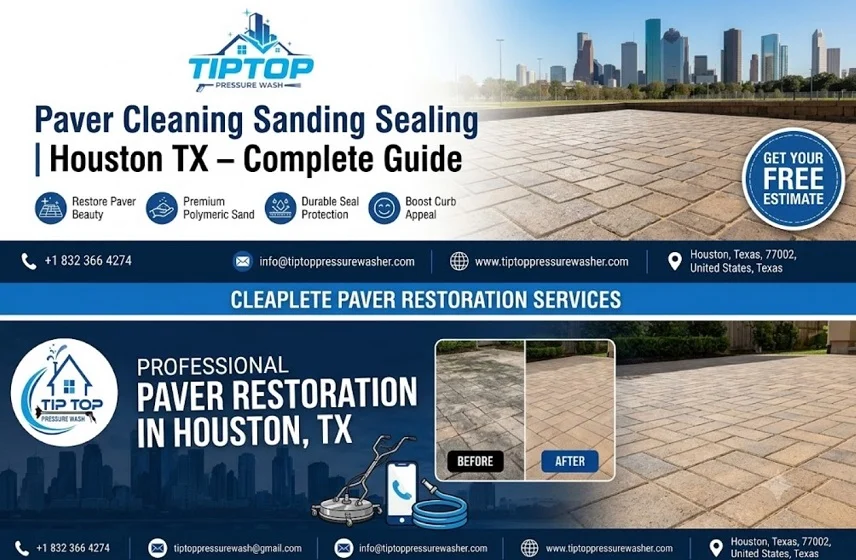
Pavers can make a home look beautiful. A clean paver patio, driveway, walkway, or pool deck adds curb appeal, improves outdoor living space, and creates a premium look around your property. But in Houston’s humid climate, pavers can quickly become dirty, faded, stained, slippery, and full of weeds if they are not maintained properly.
Tip Top Pressure Washing provides professional paver cleaning sanding sealing Houston TX services in Houston, TX and nearby areas including Sugar Land, Rosenberg, Richmond, Missouri City, Katy, Cypress, Spring, Tomball, Stafford, The Woodlands, Pearland, Fulshear, Bellaire, Memorial, West University, and surrounding Texas communities.
This guide explains everything homeowners and property owners should know about paver cleaning, joint sanding, polymeric sand, sealing, maintenance, cost factors, common mistakes, and when to hire a professional.
What Is Paver Cleaning, Sanding & Sealing?
Paver cleaning, sanding, and sealing is a multi-step exterior restoration service designed to clean the paver surface, refresh the joints, and protect the finished area. It usually includes three main steps:
- Paver Cleaning removes dirt, algae, mildew, stains, weeds, leaves, grime, and outdoor buildup from the surface and joints.
- Paver Sanding replaces or refreshes the sand between the joints, giving the surface a cleaner, more finished look and helping reduce weed growth.
- Paver Sealing applies a protective layer over the surface, which may help guard against moisture, stains, and fading while improving color.
For many Houston homes, this service is ideal for patios, driveways, pool decks, walkways, garden paths, outdoor kitchens, and entry areas. If your outdoor space also includes a covered sitting area, our patio cleaning services pair well with paver restoration for a complete refresh.
Why Houston Pavers Get Dirty So Fast
Houston weather is tough on exterior surfaces. Heat, humidity, rain, tree coverage, moisture, pollen, and foot traffic all contribute to paver buildup. Common problems include green algae, black mildew, dirt and mud buildup, leaf stains, weed growth between joints, ant activity, faded color, pool water residue, oil stains on driveway pavers, rust marks, food and drink stains, slippery shaded areas, and loose or missing joint sand.
Pavers near trees, pools, or in high-traffic zones often need cleaning more frequently. Driveway pavers may also show tire marks and vehicle-related buildup — a concern we cover in more detail in our guide to driveway cleaning in Houston, TX, which explains how to remove algae, oil stains, and concrete buildup.
Signs Your Pavers Need Cleaning and Sealing
You may need professional paver restoration if you notice pavers that look faded or dull, weeds growing between joints, missing or washed-out joint sand, a green tint after rain, a slippery surface, oil marks on the driveway, quick water absorption, an uneven or neglected appearance, or a previous sealer that looks cloudy or patchy.
If the pavers are only lightly dirty, cleaning may be enough. If the joints are weak or the color is fading, cleaning plus sanding and sealing is the better solution.
Benefits of Paver Cleaning and Sealing
Better curb appeal comes from clean, sealed pavers that make a home look newer and more attractive, especially before listing a property or hosting guests. Weed reduction happens because cleaning and sanding limit weed-friendly gaps, and sealing stabilizes the joints further. Color enhancement is possible with some sealers that bring out the natural richness of the paver material. Surface protection helps guard against moisture, dirt, and stains, reducing absorption so future cleaning is easier. Sealed pavers also mean easier maintenance, since dirt has a harder time penetrating — leading to a better overall outdoor experience for family, guests, and customers.
What Is Paver Sanding?
Paver sanding is the process of adding fresh sand between paver joints after cleaning. Over time, joint sand washes out due to rain, pressure cleaning, foot traffic, and drainage. Missing sand leaves the surface looking unfinished, invites weeds, lets dirt collect deeper, and can disturb the joints.
Fresh joint sand fills gaps, improves the finished appearance, reduces weed-friendly spaces, supports joint stability, and prepares the surface for sealing. Sanding is especially important after deep cleaning services, since the cleaning process may remove loose or weak sand from the joints.
What Is Polymeric Sand?
Polymeric sand is a jointing sand with special additives that, once activated with water, help bind sand particles together inside the joints. It can reduce joint sand washout, help reduce weed and insect activity, improve the finished look, support joint stability, and works well before sealing in many paver systems.
Polymeric sand must be installed carefully — leftover residue on the surface before activation can create haze or a film. The surface must be properly cleaned, swept, compacted where appropriate, and prepared before watering, which is one reason many homeowners choose a professional instead of a DIY approach.
What Does Paver Sealer Do?
Paver sealer is applied after the surface has been cleaned and prepared. It may help protect against moisture, reduce stain absorption, enhance color, stabilize joint sand, reduce dirt penetration, and make future cleaning easier. Sealing is not permanent and does not eliminate all maintenance, but it can make a major difference in how pavers look and how easily they can be maintained.
Natural Look vs Enhanced Look Sealer
A natural look sealer protects pavers while keeping the appearance close to the original color — a clean, protected look without a darker or glossy finish.
An enhanced look sealer brings out deeper color, making old or faded pavers look more vibrant.
A wet look sealer creates a more dramatic, sometimes glossy finish, depending on the product and surface.
The right choice depends on paver type, age, color, previous sealer condition, and how the area is used.
Our Professional Paver Restoration Process
Step 1: Inspection — we review the paver area, stain level, joint condition, drainage, weeds, previous sealer, and access.
Step 2: Area Preparation — furniture, planters, grills, rugs, vehicles, and loose items are moved before cleaning for a more even result.
Step 3: Paver Cleaning — we remove dirt, algae, mildew, stains, weeds, and buildup based on the surface condition and paver type.
Step 4: Joint Cleaning — loose sand, weeds, and debris are removed from the joints where needed.
Step 5: Drying Time — the surface must dry properly before sanding and sealing, since sealing damp pavers can lead to poor results.
Step 6: Sand Application — fresh joint sand or polymeric sand is worked into the joints for a clean, finished appearance.
Step 7: Sealer Application — sealer is applied according to the selected finish and product requirements.
Step 8: Final Review — we walk the area with you and provide basic care instructions.
Paver Cleaning and Sealing Cost Factors
Paver cleaning, sanding, and sealing usually requires a custom estimate because every project is different. Cost depends on square footage, paver type, stain level, weed growth, joint sand condition, previous sealer condition, surface access, and whether the property is residential or commercial. A small patio with light buildup costs less than a large driveway with oil stains, missing joint sand, weeds, and previous sealer problems.
Below is a general Houston-area price guide based on typical market rates for paver services (final pricing depends on your project’s specific condition):
| Service | Typical Houston Market Price Range |
|---|---|
| Paver Cleaning Only | $0.35 – $0.75 per sq. ft. |
| Paver Cleaning + Joint Sanding | $0.75 – $1.50 per sq. ft. |
| Paver Sealing Only | $1.00 – $2.50 per sq. ft. |
| Full Paver Cleaning, Sanding & Sealing | $2.00 – $4.50 per sq. ft. |
| Polymeric Sand Installation (add-on) | $1.50 – $3.00 per sq. ft. |
| Small Patio (100–300 sq. ft.) | $300 – $1,200 total |
| Average Driveway (400–800 sq. ft.) | $900 – $3,200 total |
| Large Pool Deck / Commercial Area | $2,500 – $8,000+ total |
For an exact number, request a free quote and compare it with our related pressure washing cost breakdown for Houston, TX, which covers pricing for house washing, driveway cleaning, roof cleaning, and more.
Helpful Tip: For the fastest quote, send photos of the paver area, close-ups of joints, stains, weeds, and the full layout so our team can understand the scope before visiting.
Residential Use Cases
Homeowners often request this service for backyard patios, pool decks, walkways, driveways, outdoor kitchens, garden paths, entryways, and courtyards — especially before selling a home, hosting guests, summer pool season, or real estate listing photos. If your home exterior also needs attention, our house soft wash service and roof cleaning service are commonly bundled with paver restoration for a full property refresh.
Commercial Use Cases
Commercial properties also benefit from clean, sealed pavers in outdoor dining areas, hotel entrances, apartment communities, HOAs, retail centers, and pool areas. For businesses, paver maintenance improves customer experience and makes outdoor areas look more professional — much like our commercial power washing services do for storefronts and parking areas.
Common Mistakes to Avoid
Sealing dirty pavers can trap dirt, stains, and mildew under the sealer. Skipping joint sand replacement leaves the restoration incomplete. Sealing too soon — before pavers fully dry — can cause cloudiness or poor bonding. Using too much pressure can strip joint sand or damage the surface. Choosing the wrong finish may not match the property’s style. Ignoring drainage issues can cause stains and buildup to return quickly.
Maintenance Tips After Paver Sealing
Sweep regularly to remove leaves and debris before they stain the surface. Rinse light buildup like pollen and dust. Clean spills quickly, especially oil, grease, and rust sources. Avoid harsh chemicals that may damage the sealer. Watch for early weed growth and remove it promptly. Many surfaces benefit from resealing every 2 to 3 years depending on traffic, weather, and sealer condition.
Local Houston Insights
Houston’s humidity makes paver maintenance especially important. Shaded patios, pool decks, tree-covered driveways, and outdoor dining spaces often develop algae and mildew faster than dry, sunny areas. Homes in Sugar Land, Katy, Richmond, Rosenberg, Pearland, Cypress, Memorial, The Woodlands, and Missouri City often see the biggest visual difference from professional paver care, particularly near trees, pools, or sprinklers.
Before and After Benefits
Before service, pavers may look dull, faded, stained, green, slippery, weedy, or neglected. After professional cleaning, sanding, and sealing, they can look cleaner, brighter, more finished, and more inviting — improving outdoor living for homeowners and customer experience for commercial properties.
Frequently Asked Questions
How often should pavers be sealed in Houston?
Many surfaces benefit from resealing every 2 to 3 years, depending on sun exposure, moisture, traffic, and drainage. High-traffic driveways and pool decks may need it sooner.
Do pavers need to be cleaned before sealing?
Yes. Sealing over dirt, mildew, weeds, or stains can trap problems and lead to poor results.
What is paver sanding?
It’s the process of adding fresh sand between paver joints after cleaning to fill gaps and prepare the surface for sealing.
What is polymeric sand?
Jointing sand with additives that bind particles together when properly activated, commonly used between concrete or brick pavers for better joint stability.
Will sealing stop weeds forever?
No, but it can help reduce weed growth when combined with proper cleaning and sanding. Routine maintenance is still needed.
Can old pavers be cleaned and sealed?
Yes, in most cases — though heavily damaged pavers or failed previous sealer may need extra preparation.
Will paver sealing make the surface slippery?
Some sealers can affect texture, especially around pools, so the product should be chosen carefully for the surface and use.
Can you seal driveway pavers?
Yes, though driveway pavers often need extra preparation due to tire marks, oil stains, and vehicle traffic.
Can you clean pool deck pavers?
Yes — pool deck pavers are common candidates for cleaning and sealing due to constant water, sun, and foot traffic exposure.
How long does paver sealing take?
Timing depends on area size, cleaning needs, drying time, sanding, sealer type, and weather conditions.
How do I get a paver cleaning and sealing quote?
Call Tip Top Pressure Washing or request a free estimate online. For faster quoting, send photos of the paver area, stains, weeds, joint condition, and full layout.
Conclusion
Paver cleaning sanding sealing Houston TX is one of the best ways to restore and protect patios, driveways, walkways, pool decks, and outdoor living areas. Basic cleaning removes dirt and algae, but a complete restoration process also refreshes the joints and protects the surface with sealer.
If your pavers look faded, stained, slippery, full of weeds, or poorly maintained, it may be time to schedule professional paver cleaning and sealing. Explore our other driveway cleaning and concrete cleaning services for a full exterior refresh.
Tip Top Pressure Washing serves Houston, Sugar Land, Rosenberg, Richmond, Missouri City, Katy, Cypress, Spring, Tomball, Stafford, The Woodlands, Pearland, Fulshear, Bellaire, Memorial, West University, and nearby Texas communities.